Creativity is the Way
Using creativity to navigate grief
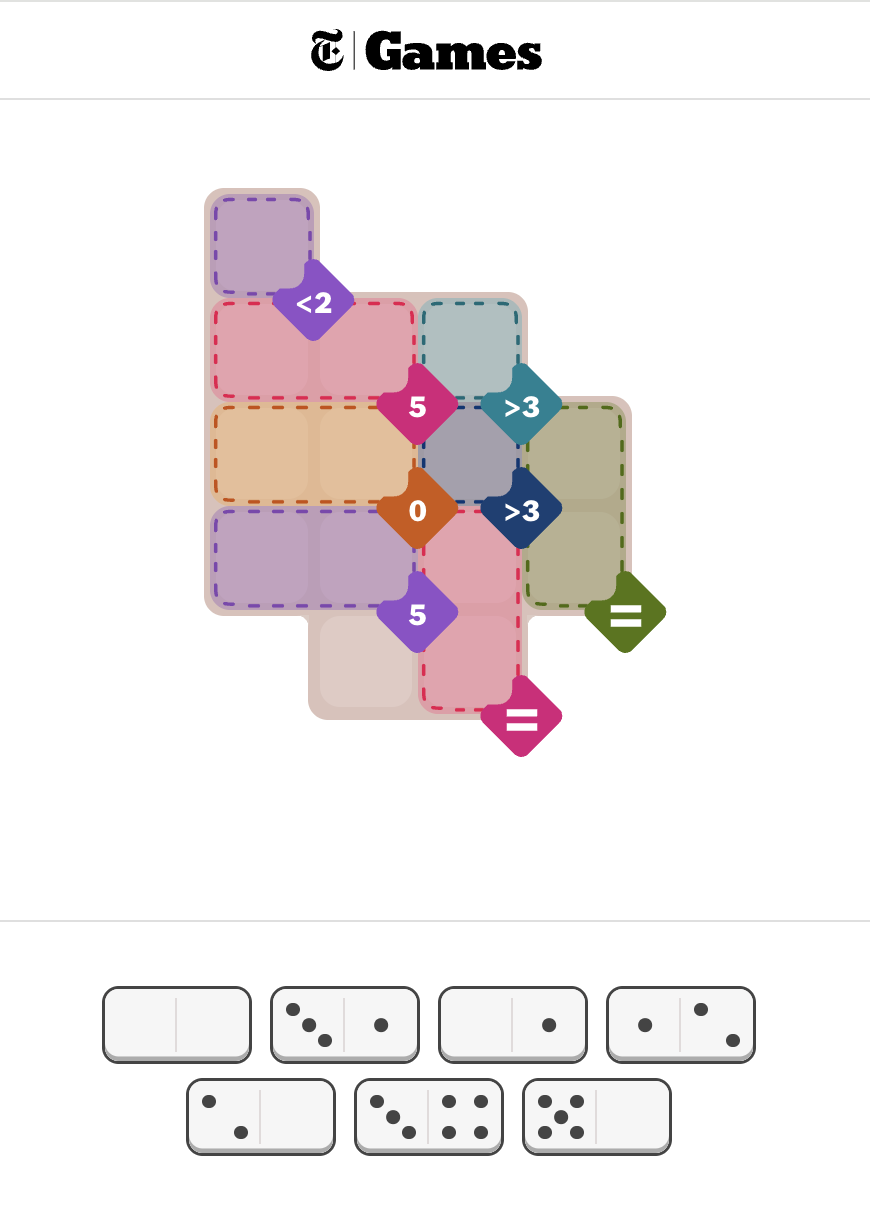
The other day I was working on a Pips puzzle in the New York Times app. It's a puzzle where you place dominoes in spots on the game board to fulfill certain requirements – like the squares all must equal the same number or their total must be greater than four or less than one. Usually, I speed through the easy-level games in a minute or less but the medium-level ones take more work.
While puzzling over a medium-level Pips puzzle I realized that the strategy I was using that day wasn't working, so I pressed the "Clear" button and started over. There was one area of the puzzle where I was certain that the two dominoes I had placed were in the correct position. I tried again to solve it and failed. So I pressed "Clear" again. Finally, I realized that my insistence on that one area being solved correctly was tripping me up.
So, I stopped and looked at the board overall and realized maybe I should try to solve it from the upper left area rather than the lower right area that I had been starting from each time. By doing this I was seeing the board differently and it opened up a world (or at least a puzzle's worth) of possibilities. In under a minute I had solved the puzzle that had seemed unsolvable for the past four minutes.
I believe that this is what creative thinking does for us. It opens up the possibilities. It allows us to see things from different angles and therefore to imagine and believe in how things can be faced or even resolved differently. When we insist on going one way – especially the way we've been going for a long time, we get stuck in that way of thinking about the issue we are facing and are unable to see a way forward. Whereas, when we look at something creatively and apply novel approaches we start to see possibilities that were previously obscured.
In my practice as a grief support practitioner, I have seen this happen for my clients too. When they apply creative thinking directly, or indirectly, to the issue they are facing, novel approaches and creative reframing can happen that gets them unstuck from their grief rut. The indirect creative activity comes about from a practice that is not specifically about their grief or their specific loss but the simple act of creating – this opens up the brain pathways for positive imaginings and unique approaches. These positive imaginings and unique approaches can be applied to a person's specific grief experience to move toward wholeheartedness.
For instance, a client grieving the death of her parents joined a local theatre group and performed in a musical. It wasn't specifically about grief or dying or aging or any of the things that one would say were about her grief experience, but opening up herself creatively allowed her to look at her new circumstances, and her relationship with her parents, in new ways.
In a similar manner, I have seen how some clients who sketch or write specifically about their loss often arrive at a point of view that was previously inaccessible to them. All of this is possible because creativity is the way – in puzzles, in grieving, in life.
— Janice